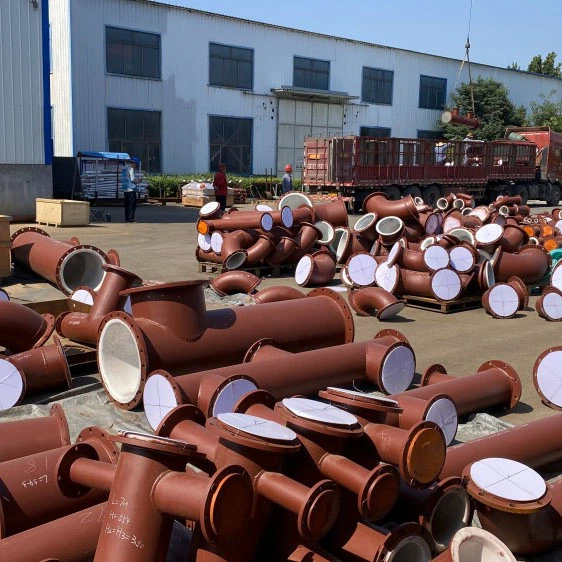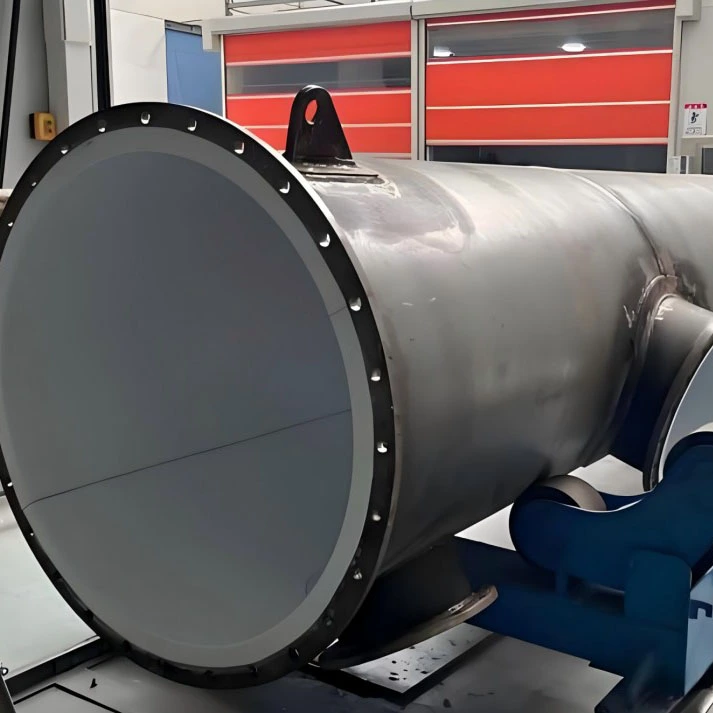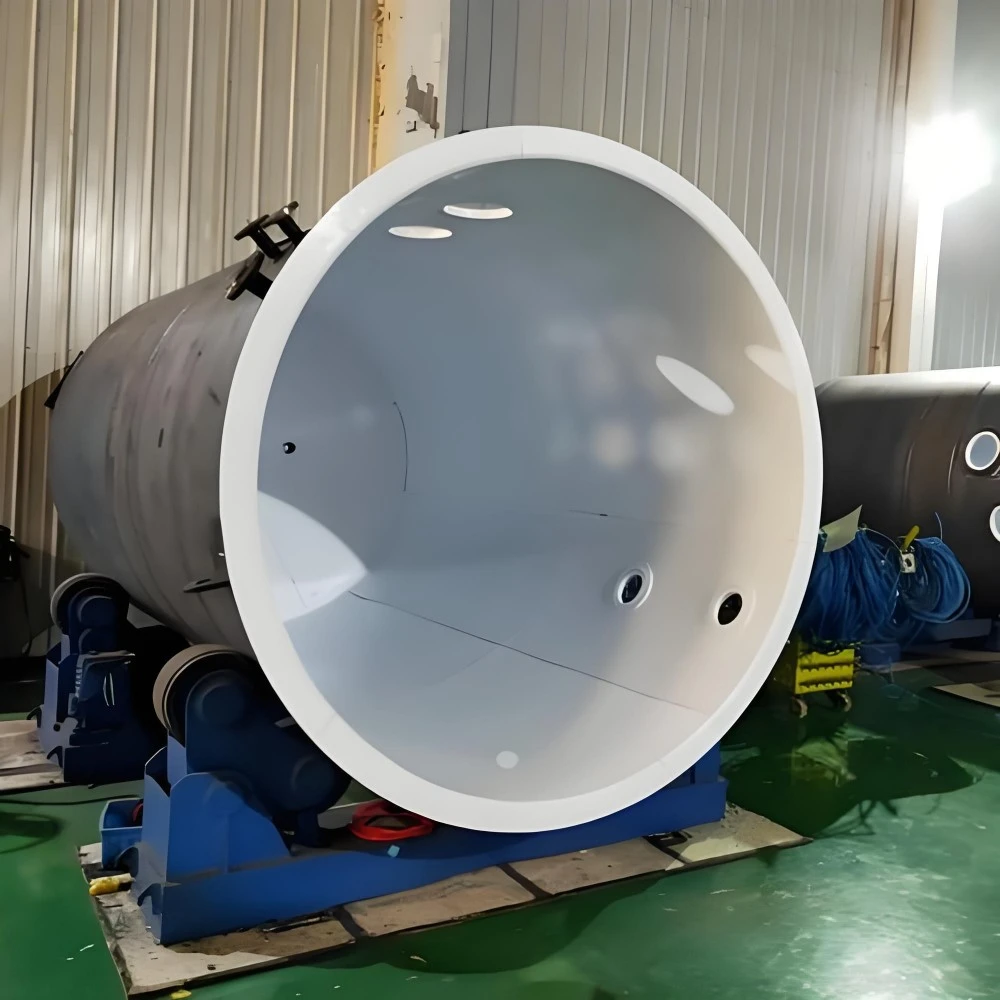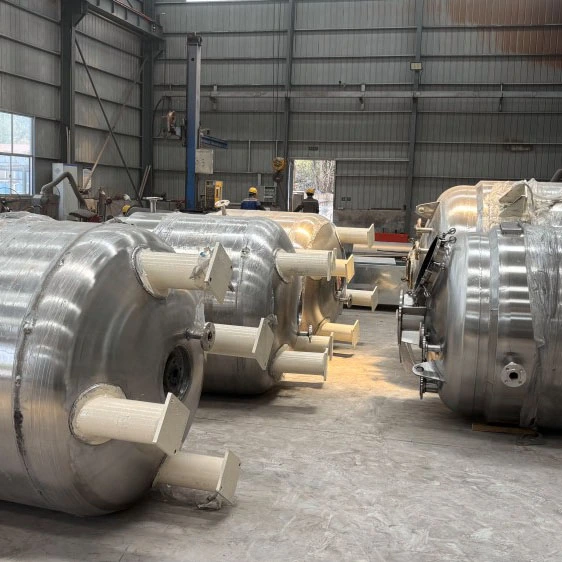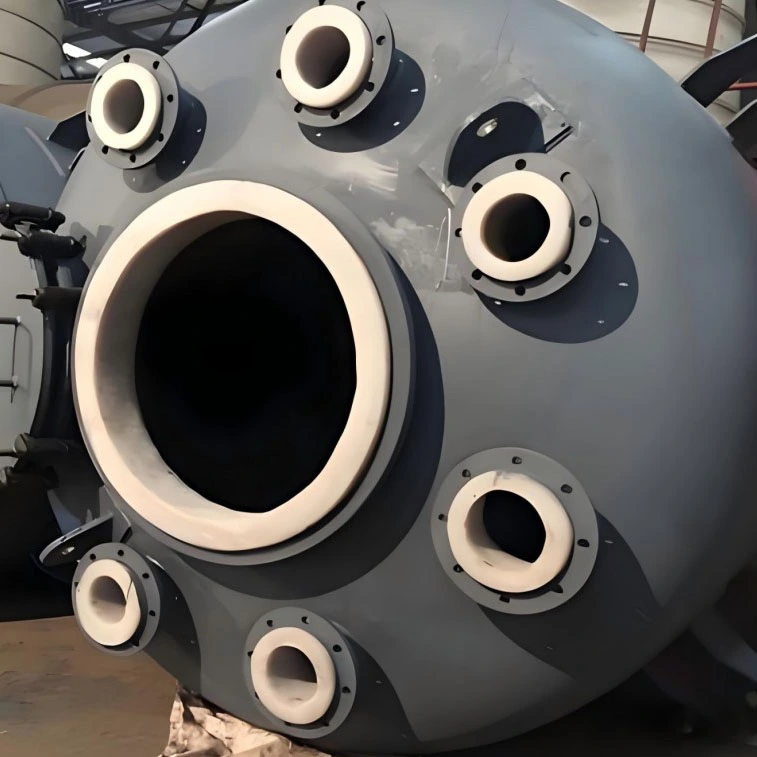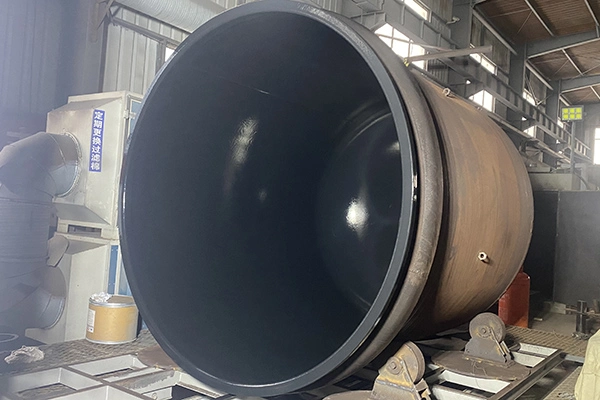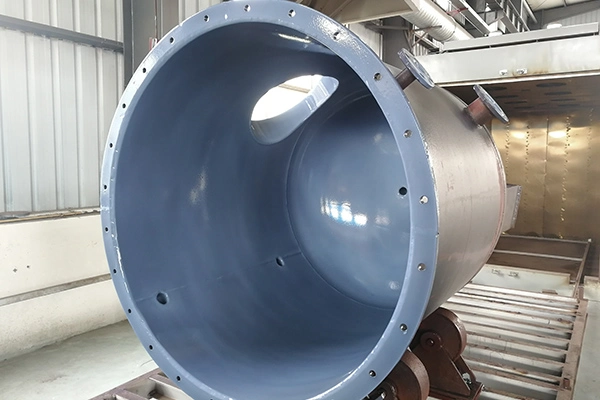

Corrosive chemicals place demanding requirements on the materials, structure, and operating conditions of industrial process vessels. Polytetrafluoroethylene (PTFE) lining provides a corrosion-resistant internal surface, while the surrounding steel structure supplies mechanical support. Choosing a suitable lined vessel, however, requires more than identifying a chemical-resistant material or specifying a nominal capacity.
This guide explains how to assess chemical compatibility, temperature and pressure conditions, vessel configuration, connections, inspection requirements, and operating procedures. It also examines the differences among reactors, storage tanks, receivers, and mixing tanks, helping process engineers develop a clearer equipment specification before design approval and manufacturing.
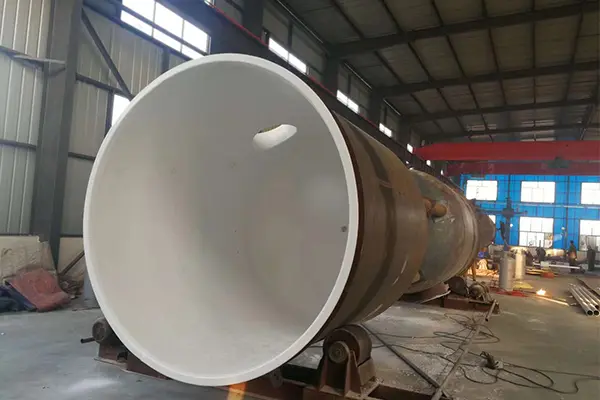
Table of Contents
Select a section to explore the relevant engineering and equipment selection considerations.
- Understanding PTFE Lining in Chemical Processing
- How the Lining and Steel Structure Work Together
- Four Main Types of Lined Process Vessels
- Evaluating Chemical Compatibility
- Temperature, Pressure, and Vacuum Requirements
- Capacity, Dimensions, and Equipment Layout
- Nozzles, Manways, and Process Connections
- Lining Inspection and Quality Verification
- Preparing an Equipment Specification
- Common Selection and Design Mistakes
- Installation, Operation, and Maintenance
- Planning a Custom Equipment Configuration
- Frequently Asked Questions
- Final Selection Considerations
1. Understanding PTFE Lining in Chemical Processing
Industrial chemical processes frequently involve acids, alkalis, solvents, intermediates, and other substances that may attack conventional metallic wetted surfaces. Material selection therefore becomes a critical part of equipment engineering, particularly when the process requires repeated exposure to a corrosive medium under controlled operating conditions.
PTFE Lined Equipments are designed around a simple principle: separate the process material from the structural metal by introducing a corrosion-resistant internal lining. The lining serves as the intended contact surface, while the outer steel vessel provides the structural support required by the equipment design.
PTFE, or polytetrafluoroethylene, is a fluoropolymer known for its broad chemical resistance and relatively low friction surface. These properties make it a candidate for many chemical containment and processing applications. Nevertheless, material suitability must be established for the actual chemical composition, concentration, temperature, and operating conditions rather than assumed from the material name alone.
Why the internal contact surface matters
The wetted surface is the part of a vessel, connection, or accessory that comes into direct contact with the process material. Its chemical compatibility can influence contamination control, equipment integrity, inspection requirements, and the frequency of maintenance interventions.
For a vessel holding corrosive raw materials, the main concern may be the prolonged contact between the liquid and the lining. A reaction vessel presents a different challenge because chemical composition, temperature, pressure, and agitation can change during a batch. A receiver may be exposed to a process stream for a shorter period but still require compatibility with the incoming material and any condensed liquid.
Each application should therefore be evaluated as a complete duty rather than as an isolated material selection decision.
Engineering principle: Corrosion resistance is one part of equipment suitability. Structural integrity, lining support, sealing arrangements, temperature limits, pressure conditions, and process configuration must also be considered.
Where a lined vessel fits into a process
Depending on the plant arrangement, a lined vessel may receive incoming materials, hold them between processing stages, facilitate a chemical reaction, or provide a controlled environment for mixing. The vessel must match its intended process function, including the expected flow path, material transfer method, and relationship with connected equipment.
Defining this role at an early stage helps prevent a common specification problem: requesting a generic corrosion-resistant vessel without clarifying the precise operations that the vessel must perform.
2. How the Lining and Steel Structure Work Together
A lined vessel contains two principal functional elements: the internal fluoropolymer lining and the surrounding structural body. Although they form one piece of process equipment, these elements serve different purposes and need to be evaluated together.
The internal lining
The lining creates a barrier between the process medium and the underlying metal. Its effectiveness depends on the suitability of the polymer for the specified medium, the lining construction, the condition of the finished surface, and the way the lining accommodates the vessel geometry.
Areas around nozzles, corners, changes in diameter, openings, and other transitions deserve particular attention. These locations can involve more complicated geometries than a broad, relatively uniform vessel wall. The proposed construction method should be appropriate for the equipment dimensions and the surfaces that require protection.
The external steel body
The steel body supplies structural support and forms the principal load-bearing structure. Its design needs to account for the required capacity, external loads, vessel arrangement, connected piping, support conditions, and applicable pressure-vessel requirements where relevant.
Installing a chemically resistant lining does not remove the need to engineer the metal structure. Structural materials, wall construction, support arrangements, and connections must be selected for the intended service and the applicable design basis.
The interface between the two components
A polymer lining and a metal vessel respond differently to changes in temperature and mechanical loading. Their interaction is therefore an important design consideration, especially when the process involves heating, cooling, pressure variation, or repeated operating cycles.
The suitability of the lining retention method, thickness, geometry, and supporting arrangement should be confirmed for the proposed vessel. Designers should also consider how the system will respond during startup, normal operation, cleaning, shutdown, and foreseeable process deviations.
The exact construction details depend on the equipment type and manufacturing method. A design suitable for one vessel geometry should not automatically be assumed suitable for another vessel operating under different mechanical or thermal conditions.
3. Four Main Types of Lined Process Vessels
Although lined reactors, storage tanks, receivers, and mixing tanks may share a similar basic construction concept, their process duties are not interchangeable. Selecting the correct type begins with identifying what the vessel must do within the production system.
3.1 PTFE Lined Reactors
A reactor accommodates a chemical reaction or another process in which the contents undergo a defined transformation. The internal wetted surfaces must be compatible with the starting materials, reaction products, intermediates, and relevant cleaning media.
Reaction conditions can change throughout a batch. A process that begins with several separate components may develop a different chemical composition as the reaction progresses. Temperature may rise or fall, while gas generation, vapor formation, or pressure changes may influence the required vessel configuration.
For these reasons, reactor specifications should describe the full operating sequence instead of providing only the normal steady-state conditions.
- Define the chemical composition and concentration of the materials present during each important process stage.
- Specify normal and maximum operating temperatures, design pressure, and any potential vacuum conditions.
- Identify required heating, cooling, charging, discharging, and sampling connections.
- Confirm whether agitation, additional instrumentation, or other process accessories are required.
The objective is to coordinate the lining, vessel structure, and accessories with the actual reaction process, not simply to reproduce the dimensions of an existing tank.
3.2 PTFE Lined Storage Tanks
Storage tanks are used to hold chemical raw materials, intermediates, and process liquids before they are transferred to another stage. Unlike a reactor, a storage tank may not perform an active transformation of its contents. Nevertheless, the stored medium can remain in contact with the lining for an extended period.
Selection should consider the stored chemical, its concentration, the duration of contact, and the full range of storage temperatures. Conditions during filling, emptying, cleaning, and temporary shutdown must also be assessed.
Tank layout is another important consideration. The required working volume, access for inspection, transfer connections, installation area, and relationship with pumps or connected process lines all influence the final configuration.
- Distinguish nominal vessel capacity from the required usable working volume.
- Specify the chemical media stored in the tank, including relevant cleaning fluids.
- Provide the inlet, outlet, vent, drain, and instrumentation requirements where applicable.
- Confirm the intended installation location and any access or maintenance restrictions.
A suitable storage configuration must provide the required containment function while remaining compatible with the chemical and mechanical conditions encountered in service.
3.3 PTFE Lined Receivers
Receivers collect material from an upstream process operation before it is transferred, processed further, or directed elsewhere in the production system. Depending on the process, the received material may be a liquid, a condensate, a mixture, or a stream whose composition varies over time.
A receiver can appear simpler than a reactor because its primary purpose may be collection rather than reaction. However, the receiving duty still needs to be defined. The incoming stream, expected accumulation volume, transfer frequency, temperature, and pressure conditions influence the required configuration.
Connections deserve particular attention because a receiver is often positioned between separate pieces of equipment. Incorrect nozzle orientation or connection sizing can complicate installation and affect the intended process flow.
- Identify the upstream source and the expected characteristics of the incoming stream.
- Estimate the maximum quantity that may accumulate before the next transfer operation.
- Define the discharge route and any required venting or level-monitoring connections.
- Confirm the operating pressure and possible pressure changes during transfer or shutdown.
These details establish whether the selected receiver can perform its collection duty within the wider system arrangement.
3.4 PTFE Lined Mixing Tanks
Mixing tanks combine materials or maintain a mixture under specified process conditions. Their design may include an agitator, drive arrangement, shaft entry, baffles where appropriate, and multiple material connections.
The wetted components must be considered as a complete assembly. Compatibility of the main vessel lining does not automatically establish the suitability of every component that contacts the medium. Shaft-related components, seals, gaskets, and other accessories need their own material and operating-condition checks.
Agitator selection also influences the equipment design. Required mixing performance, liquid properties, expected solids content, operating speed, and the geometry of the vessel may affect the configuration. Mechanical loads and the interface between the agitator assembly and the lined vessel should be reviewed before manufacturing details are finalized.
- Define the materials to be mixed and any expected changes during operation.
- Specify whether an agitator is needed and provide the relevant mixing requirements.
- Identify shaft entry arrangements, seals, instrumentation, and other process interfaces.
- Review the cleaning method and accessibility of the internal wetted surfaces.
Mixing applications require coordinated mechanical and chemical engineering rather than a vessel selection based on capacity alone.
| Equipment Type | Primary Function | Key Design Consideration | Important Process Input |
|---|---|---|---|
| Reactor | Accommodates a chemical reaction or transformation. | Changing conditions throughout the operating cycle. | Reaction stages and operating envelope. |
| Storage tank | Holds raw materials, intermediates, or process liquids. | Long-term contact and storage conditions. | Working volume and stored medium. |
| Receiver | Collects material from a process stage. | Incoming flow, accumulation, and transfer arrangements. | Inlet conditions and discharge requirements. |
| Mixing tank | Combines materials or maintains a mixture. | Agitation, shaft interfaces, and wetted accessories. | Material properties and mixing duty. |
The table presents general functional differences. Final construction details must be established for the intended process conditions.
4. Evaluating Chemical Compatibility
Chemical compatibility is a starting point for equipment selection, but it must be established using actual process information. A chemical name alone may not describe the full environment in which the lining will operate.
Identify the full composition of the medium
The process description should identify the principal chemicals and any relevant impurities, additives, reaction products, or secondary components. A mixture can behave differently from an individual pure substance, so assumptions based solely on the principal ingredient may be insufficient.
Concentration is particularly important. The composition of a process stream may change during reaction, evaporation, dilution, separation, or material transfer. The specification should identify the concentration ranges that the wetted surfaces are expected to encounter.
Include cleaning and maintenance fluids
Cleaning procedures can expose the lining to substances that are absent during normal production. Rinsing agents, cleaning solutions, or fluids introduced during maintenance should therefore be included in the compatibility assessment whenever they contact the internal surfaces.
Temperature changes during cleaning may also affect suitability. A material that is compatible with a particular liquid at one temperature should not be assumed to remain suitable under every possible temperature condition.
Consider exposure duration and process variations
The duration of contact and the expected operating cycle contribute to the overall assessment. Continuous storage, repeated batch operation, intermittent cleaning, and short transfer periods represent different exposure patterns.
Process deviations should also be considered where reasonably foreseeable. An unintended mixture, a change in concentration, or a prolonged hold may create conditions outside the routine production envelope.
Compatibility review checklist:
- Chemical identities and concentrations.
- Mixtures, impurities, and relevant process by-products.
- Normal, minimum, and maximum contact temperatures.
- Cleaning fluids and maintenance-related exposure.
- Contact duration and expected process variations.
The lining material, construction method, and equipment configuration should be reviewed against these conditions before the design is approved. If the process chemistry is incompletely defined, the unresolved information should be recorded instead of treating compatibility as confirmed.
5. Temperature, Pressure, and Vacuum Requirements
Temperature and pressure influence both the polymer lining and the overall vessel assembly. Selecting a material based on its chemical resistance without evaluating the mechanical operating envelope can result in an incomplete specification.
Operating temperature
Record the normal operating temperature as well as the highest and lowest temperatures expected during startup, production, cleaning, and shutdown. Where a reaction generates heat or a process uses heating and cooling cycles, the full temperature range should be documented.
Temperature affects polymer behavior and can influence chemical interaction, deformation, permeation, and the response of the interface between the lining and the steel body. Its effects depend on the specific lining construction and service conditions, so a single generic temperature figure should not replace design-specific verification.
Rapid temperature changes may create additional considerations. The equipment design should account for the expected thermal cycle and the compatibility of its construction with that cycle.
Positive pressure
The pressure specification should distinguish normal operating pressure from the design pressure and any relevant transient conditions. Pressure changes can occur during charging, discharging, reaction, vapor generation, or connection to other process equipment.
Vessel size, structural materials, nozzle details, sealing arrangements, and the applicable design code may influence the allowable operating envelope. The complete assembly must be evaluated rather than relying solely on the rating of one component.
Vacuum and negative-pressure conditions
Vacuum conditions require explicit consideration. They may arise during vacuum processing, vapor condensation, pump operation, or other stages of the process. A vessel that routinely operates under positive pressure may encounter a different mechanical loading condition when its internal pressure falls below the external pressure.
PTFE lining support and the overall vessel construction must be reviewed for the specified vacuum duty. The expected minimum absolute pressure, exposure duration, operating temperature, and frequency of vacuum cycles should be included in the engineering review.
It is not sufficient to infer vacuum suitability from chemical resistance or from a positive-pressure rating. The proposed lined assembly must be confirmed for the actual vacuum conditions and operating sequence.
Combine the operating conditions into one specification
Pressure and temperature should be evaluated together. The maximum temperature, design pressure, and deepest vacuum should not be treated as unrelated values if they can occur during the same operating stage. The specification should identify combinations that are possible in practice and indicate which stages require separate evaluation.
| Condition | Information to Provide | Design Review Focus |
|---|---|---|
| Temperature | Normal range, maximum, minimum, and temperature changes. | Lining suitability and thermal behavior of the assembly. |
| Positive pressure | Operating pressure, design pressure, and transient conditions. | Structural design, joints, and applicable equipment ratings. |
| Vacuum | Minimum absolute pressure, duration, and operating stage. | Lining support and full-vessel suitability under vacuum. |
| Process cycling | Startup, shutdown, cleaning, and repeated operating sequences. | Combined thermal and mechanical conditions. |
6. Capacity, Dimensions, and Equipment Layout
Capacity is an important parameter, but it does not fully define the dimensions or suitability of a process vessel. Two vessels with the same nominal volume may have different heights, diameters, head geometries, support arrangements, and connection layouts.
Working volume and nominal capacity
Nominal volume describes the vessel's stated capacity, while working volume is the quantity intended to be held or processed during normal operation. The distinction is particularly important for reactors and mixing tanks, where sufficient space may be required for agitation, vapor generation, foam, expansion, or other process behavior.
The appropriate operating fill level depends on the process and vessel design. The required margin should be evaluated rather than assumed to be identical across different applications.
Overall dimensions and installation space
Confirm the maximum permitted height, diameter, and overall envelope. Consider the available access route, door and opening dimensions, lifting arrangements, structural clearances, maintenance space, and the position of nearby equipment.
Transport and installation constraints can also influence the vessel configuration. A vessel that fits its operating location may still require a separate review of how it will be moved into the building or positioned on its foundation.
Supports and connected equipment
Support legs, skirts, brackets, lifting features, and foundation interfaces should align with the structural design and site conditions. Connected pumps, agitator drives, instruments, and piping may impose additional loads or space requirements.
The layout should leave suitable access to operating points and inspection areas. Maintenance needs are easier to address when they are considered before the arrangement is finalized.
When a dimensioned drawing is necessary
A preliminary process description may be adequate during initial discussions, but a dimensioned arrangement becomes increasingly important as the design progresses. The drawing should identify principal dimensions, nozzle positions, support points, access openings, and relevant interfaces with adjacent equipment.
Where plant connections already exist, the proposed vessel should be checked against the available piping layout. Any necessary deviations should be identified and resolved before manufacturing drawings are approved.
7. Nozzles, Manways, and Process Connections
Connections link a vessel with the rest of the production system. They may be needed for charging, discharging, venting, sampling, instrumentation, cleaning, temperature monitoring, or other functions. Their placement and construction influence how effectively the vessel can be installed, operated, and inspected.
Nozzle location and orientation
Each nozzle should have a clearly identified function and position. The specification or approved drawing should establish its nominal size, orientation, connection type, and any relevant elevation or angular requirement.
Inlet and outlet placement should reflect the intended process flow. Drainage, material transfer, and access requirements may also affect the vessel geometry. Changes to nozzle locations after lining or fabrication work has begun can create additional engineering and manufacturing complications.
Manways and inspection access
Manways and access openings support inspection, cleaning, and maintenance where the vessel design permits. Their dimensions and locations should reflect the intended inspection method, safe access needs, and the surrounding plant arrangement.
Opening details must also be compatible with the lining design. The transition between an opening and the adjacent lined surface requires particular attention because it combines a process interface with a structural feature.
Agitators, instruments, and auxiliary components
Depending on the process, a vessel may require a liquid-level instrument, temperature sensor, pressure connection, sight glass, agitator, or additional fittings. Not every vessel needs every accessory, and the required arrangement should be based on the process duties rather than a generic list.
Each wetted accessory requires a compatibility review. Gaskets, seals, instrument interfaces, and connected components must be appropriate for the chemical medium and the applicable pressure and temperature conditions.
Organize connection information clearly
A nozzle schedule is a useful way to avoid ambiguity. It can identify each connection by tag, function, size, quantity, orientation, and connection type, with drawing references where required.
Providing this information early helps the engineering and manufacturing teams check clearances, coordinate accessories, and establish a consistent arrangement before the design is released.
8. Lining Inspection and Quality Verification
Inspection should be planned as part of the equipment specification rather than added only after manufacturing is complete. The required inspection activities depend on the lining method, vessel design, applicable standards, process risk, and contractual acceptance criteria.
Define the inspection scope before production
Identify the records and examinations required for the lined surfaces, structural body, connections, and finished assembly. The specification should indicate which requirements are mandatory, which standards apply, and who is responsible for reviewing the results.
Where a particular lining inspection method is appropriate, its procedure and acceptance limits should be agreed in advance. For example, electrical holiday testing may be relevant to certain nonconductive linings and suitable equipment configurations, but its use and test settings must be established for the specific construction. It should not be assumed to apply identically to every lining process or thickness.
Inspect difficult geometric areas
Inspection planning should account for locations that are more difficult to access or assess, including nozzle transitions, openings, corners, and other changes in geometry. These areas may require different inspection techniques or more detailed drawing and manufacturing controls.
Visual examination, dimensional checks, and other applicable methods should be defined according to the construction requirements. Any mandatory pressure tests or structural examinations should also be identified where relevant to the equipment design.
Clarify documentation and acceptance criteria
The acceptance process should specify what evidence is required before the equipment can be released. Depending on the project, documentation may include approved drawings, material information, inspection records, test results, and records of accepted deviations.
Statements such as “inspect the lining carefully” are less useful than a defined inspection plan that identifies the method, applicable location, acceptance criteria, and required record. Precise requirements give the manufacturer and customer a common basis for reviewing the completed equipment.
Maintain traceability of approved changes
Design changes should be documented, reviewed, and approved by the responsible parties. An alteration to a connection, accessory, or operating condition can affect other parts of the equipment specification. Recording the reason for a change and its technical approval helps preserve consistency between the manufacturing documents and the final assembly.
9. Preparing an Equipment Specification
A clear specification gives the equipment engineering team enough information to evaluate the application and identify unresolved requirements. It should describe not only the required vessel but also the conditions under which the vessel will operate.
The following sequence provides a practical method for organizing the design information.
-
Describe the process duty.
Explain whether the vessel will be used for reaction, storage, collection, or mixing. Identify the operating stage, upstream and downstream interfaces, and any special process functions.
-
Document the chemical medium.
List the relevant substances, concentrations, mixtures, contaminants, and cleaning fluids. Identify any stages in which the composition changes significantly.
-
Define the operating envelope.
Provide normal and extreme temperatures, operating and design pressure, vacuum conditions, and foreseeable transitions between operating states.
-
Establish capacity and dimensions.
Specify nominal capacity, usable working volume, principal dimensions, installation restrictions, and the required support arrangement.
-
Prepare the connection schedule.
List required nozzles, openings, vents, drains, instruments, agitator arrangements, and accessories. Supply a layout drawing when available.
-
Identify standards and inspection requirements.
State applicable construction requirements, inspection procedures, test expectations, acceptance criteria, and necessary documentation.
-
Review technical gaps before approval.
Record unresolved chemical data, conflicting dimensions, uncertain operating conditions, and any accessories whose compatibility or design remains unconfirmed.
Equipment specification checklist
| Specification Category | Information Required | Reason for Review |
|---|---|---|
| Process application | Vessel function, process stages, material transfer, and operating sequence. | Establishes the correct equipment type. |
| Chemical medium | Composition, concentration, impurities, and cleaning agents. | Supports lining compatibility evaluation. |
| Operating conditions | Temperature range, design pressure, vacuum duty, and transient conditions. | Defines the required operating envelope. |
| Capacity and layout | Working volume, overall dimensions, support arrangement, and installation limits. | Checks fit and process integration. |
| Connections | Nozzle sizes, positions, openings, instrumentation, and accessories. | Coordinates piping and equipment interfaces. |
| Quality requirements | Inspection procedures, testing, acceptance criteria, and records. | Defines how conformity will be verified. |
When some details remain unavailable, identify them as open technical items. This approach is more reliable than assuming dimensions, operating conditions, or acceptance requirements that have not been established by the project team.
10. Common Selection and Design Mistakes
Several problems can arise when equipment selection relies on a short product description without fully defining the intended service. Most can be reduced through a more complete process description and an early review of the technical specification.
Choosing by chemical name alone
Knowing that a vessel will hold an acid, alkali, or solvent is not enough to complete a compatibility assessment. Concentration, mixtures, temperature, exposure duration, cleaning methods, and the construction of the lining may all matter.
Better approach: Provide the full process medium and its expected operating range, then confirm suitability for the actual application.
Providing only the nominal vessel volume
A capacity figure does not determine the complete vessel geometry, allowable working volume, agitator arrangement, or connection layout. Insufficient dimensional information can lead to equipment that cannot be integrated easily into the existing plant.
Better approach: Specify working volume, overall dimensions, site restrictions, process requirements, and required connections together.
Assuming chemical resistance establishes vacuum suitability
Chemical resistance and resistance to a pressure differential address different engineering questions. The lining and supporting structure must be evaluated for the intended vacuum conditions and the relevant operating temperature.
Better approach: State the minimum absolute pressure, exposure duration, temperature, and expected vacuum cycle explicitly.
Overlooking seals and auxiliary components
A compatible main lining cannot establish the suitability of every seal, gasket, agitator component, sight glass, or instrument connection. Each relevant wetted component forms part of the complete system.
Better approach: Include the accessories and connection materials in the technical review instead of treating the main vessel as the only component requiring assessment.
Finalizing nozzle positions too late
Late changes to connection locations can affect internal geometry, piping alignment, access, and the finished lining configuration. They may also create conflicts with nearby equipment or installation clearances.
Better approach: Review a dimensioned arrangement and nozzle schedule before manufacturing drawings are approved.
Leaving inspection requirements undefined
A general request for a corrosion-resistant vessel does not explain how the finished lining will be inspected or which criteria determine acceptance. Missing details can create disagreement during the final review.
Better approach: Agree on applicable standards, inspection procedures, acceptance criteria, and required records before production begins.
Selection rule: A complete equipment specification connects the process duty, chemical medium, operating conditions, vessel configuration, and inspection requirements. Each should support the same defined application.
11. Installation, Operation, and Maintenance
Equipment suitability depends not only on its initial design but also on how the vessel is handled, installed, operated, and maintained. Appropriate procedures help preserve the integrity of the lining and identify problems before they develop into more serious equipment issues.
Handling and installation
Transport and lifting procedures should follow the equipment documentation and designated lifting arrangements. Uncontrolled impact, unsuitable lifting points, or careless handling can damage the lining or other parts of the assembly even when the external vessel appears unaffected.
Installation should also preserve the intended support conditions and connection alignment. Forced piping alignment or unintended loads on nozzles may introduce mechanical stresses that were not included in the design assumptions.
Before commissioning, verify the installation position, support arrangement, connected piping, instruments, and required accessories. Confirm that the final configuration matches the approved drawings and that required pre-operation checks have been completed.
Controlled startup and shutdown
Operating procedures should define how the vessel is filled, brought to operating temperature, pressurized where applicable, and returned to a safe condition. If vacuum or rapid temperature changes are possible, these conditions should be addressed explicitly.
Procedures should also establish how process deviations are handled. Unexpected pressure, temperature, or chemical composition changes may move the vessel outside its approved operating envelope and require a controlled response.
Cleaning practices
Cleaning methods should be compatible with the lining, seals, connected components, and the vessel's operating limitations. The selected cleaning medium, temperature, duration, and any mechanical cleaning action should be reviewed for the specific construction.
Cleaning procedures should identify how residues are removed, how the vessel is rinsed where required, and how inspection access is maintained. Unapproved chemicals or aggressive mechanical methods should not be introduced simply because the main lining is designed for corrosive service.
Routine inspection and maintenance
Inspection frequency and method should reflect the process risk, service conditions, equipment design, and applicable maintenance requirements. Operators should follow the approved procedures for recognizing signs of damage, leakage, unusual operating behavior, or deterioration of associated components.
When an issue is detected, evaluation should consider the lining, relevant connections, seals, and supporting vessel structure. The cause should be established before repairs or modifications are selected. Any repair must be suitable for the original construction and approved service conditions.
Keep operational records
Records of operating conditions, inspections, cleaning activities, maintenance work, and approved modifications can help identify recurring issues. They also make it easier to compare actual operating conditions with the assumptions used during the original design review.
Where process conditions change significantly, the vessel should be reassessed before the modified duty is introduced. A configuration approved for one chemical concentration, temperature range, or pressure condition should not automatically be assumed suitable for a different service.
12. Planning a Custom Equipment Configuration
Industrial vessels often need to fit a particular process layout, capacity requirement, and set of operating conditions. A custom configuration can address these requirements, provided that the details are defined and assessed systematically.
Zhuoyan provides industrial anti-corrosion lining and chemical equipment design and manufacturing services. The appropriate configuration for a lined vessel can be discussed in relation to its intended process function, required capacity, operating envelope, connection positions, and process accessories.
Match the configuration to the process
Customization should begin with the process requirements rather than a predetermined vessel arrangement. A storage tank with a simple transfer function may require a different set of connections from a reactor with an agitator and additional process instrumentation.
Defining the necessary functions helps distinguish essential features from optional accessories. It also gives the engineering team a clearer basis for evaluating the vessel geometry and connection layout.
Establish the technical details early
Capacity, dimensions, chemical medium, temperature, pressure, vacuum requirements, and nozzle positions should be reviewed together. If the vessel must connect to an existing system, relevant drawings and interface dimensions should be made available during the initial technical discussion.
Any unknown conditions should remain visible during the design review. In particular, unresolved chemical compatibility, unclear vacuum conditions, or incomplete connection drawings should be addressed before the equipment specification is considered complete.
Review the design before manufacturing
The proposed construction should be reviewed against the intended duty, including the lining arrangement, structural design, connections, and inspection plan. Drawings and technical documents should identify the agreed configuration so that both parties can evaluate the same design.
Changes made during this stage should be assessed for their impact on the overall assembly. A revised nozzle position, a new accessory, or an altered pressure requirement may affect other design decisions and should not be handled as an isolated change.
Information to prepare for a technical discussion
- Equipment type and intended process function.
- Chemical composition, concentration, and relevant cleaning media.
- Normal and extreme operating temperatures.
- Operating pressure, design pressure, and vacuum requirements where applicable.
- Required nominal capacity, working volume, and overall dimensions.
- Nozzle schedule, connection positions, instruments, and process accessories.
- Applicable construction standards and lining inspection requirements.
- Installation drawings and any existing equipment interface restrictions.
These inputs provide a practical starting point for technical review and quotation. The final equipment specification should be confirmed only after the relevant chemical, mechanical, dimensional, and inspection requirements have been evaluated.
13. Frequently Asked Questions
The following questions address common technical considerations when specifying fluoropolymer-lined chemical process vessels.
What are PTFE-lined vessels primarily used for?
They are used in chemical processing applications where the internal contact surfaces require corrosion protection. Common vessel types include reactors, storage tanks, receivers, and mixing tanks. The appropriate type depends on the process duty, chemical medium, operating conditions, and required configuration.
Does PTFE lining provide protection against every chemical?
No material should be treated as universally suitable under every condition. PTFE has broad chemical resistance, but the actual application still requires evaluation of the chemical identity, concentration, temperature, exposure duration, and lining construction. Specific compatibility limitations and special operating conditions should be reviewed before the vessel is approved.
Why does a PTFE-lined vessel also require a steel structure?
The lining provides the intended corrosion-resistant internal surface, while the outer steel body supplies structural support. The two components serve different functions and must be engineered together. Vessel dimensions, pressure conditions, supports, connections, and the relationship between the lining and steel body all influence the final design.
What information is needed to select the correct vessel type?
Start with the intended process function, chemical medium, operating temperature, pressure or vacuum requirements, capacity, and installation conditions. Then identify the necessary nozzles, access openings, instruments, and accessories. These details help distinguish a reactor from a storage tank, receiver, or mixing tank and establish the required configuration.
Can a lined vessel be used under vacuum conditions?
Vacuum service may be possible with an appropriately designed assembly, but it must be confirmed for the specific equipment. The review should include minimum absolute pressure, operating temperature, vacuum duration, cycle frequency, and lining support. Chemical compatibility or a positive-pressure rating alone does not establish vacuum suitability.
What should be checked when specifying a lined mixing tank?
In addition to chemical compatibility, capacity, temperature, and pressure, specify the required mixing duty and agitator arrangement. Check the suitability of shaft-related components, seals, gaskets, and other wetted accessories. Nozzle positions, cleaning access, maintenance requirements, and the installation arrangement should also be reviewed.
Which inspection requirements should be confirmed before manufacturing?
Identify the applicable construction standards, lining inspection method, acceptance criteria, structural examinations, tests, and required documentation. Methods such as visual examination, dimensional checks, or electrical holiday testing may be appropriate depending on the construction. The inspection plan should be agreed for the specific equipment rather than assumed to be identical for every vessel.
What should be included in a request for a custom vessel quotation?
Provide the vessel's intended function, chemical composition and concentration, operating temperature, pressure or vacuum conditions, required capacity, overall dimensions, connection layout, accessories, and applicable inspection requirements. Existing plant drawings and installation restrictions are useful when the vessel must integrate with an established production system. Any unresolved technical conditions should be identified for review.
14. Final Selection Considerations
Selecting suitable PTFE Lined Equipments requires a coordinated assessment of the chemical medium, lining construction, vessel structure, operating conditions, and process interfaces. Reactors, storage tanks, receivers, and mixing tanks serve different functions, so their configurations should be developed around their intended duties rather than treated as interchangeable containers.
A complete technical specification should define chemical composition and concentration, temperature, positive pressure or vacuum, capacity, dimensions, connection positions, accessories, and inspection criteria. Installation, cleaning, maintenance, and foreseeable process variations should also be considered during the design review.
Providing these details early helps establish a clear basis for evaluating the proposed equipment. It also makes it easier to identify missing information, coordinate process connections, and confirm the design requirements before manufacturing begins.
Discuss Your Chemical Equipment Requirements
Share your process medium, concentration, operating temperature, pressure or vacuum conditions, required vessel capacity, and connection layout to start a technical discussion about the appropriate configuration.
Submit Your Equipment Requirements