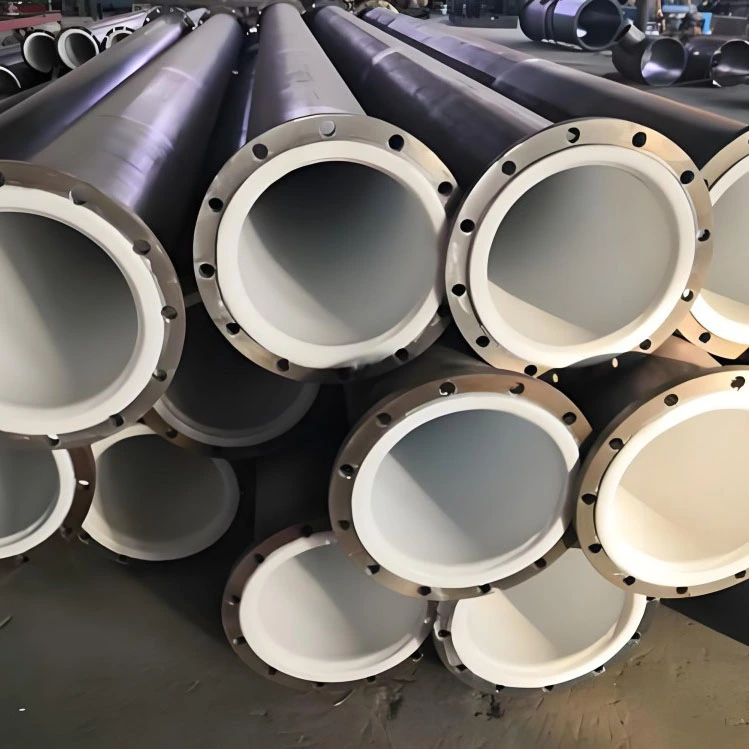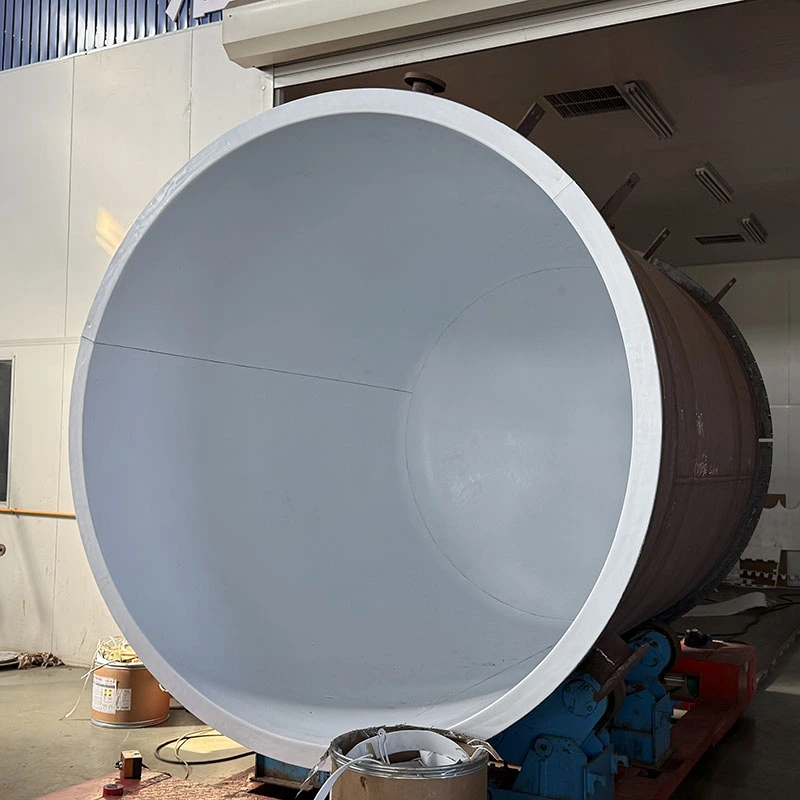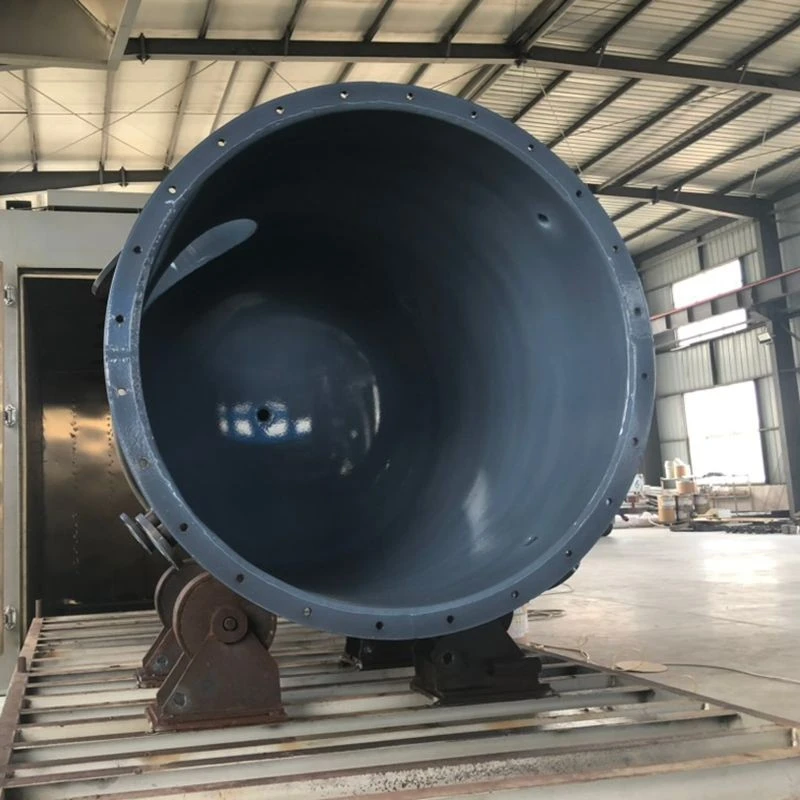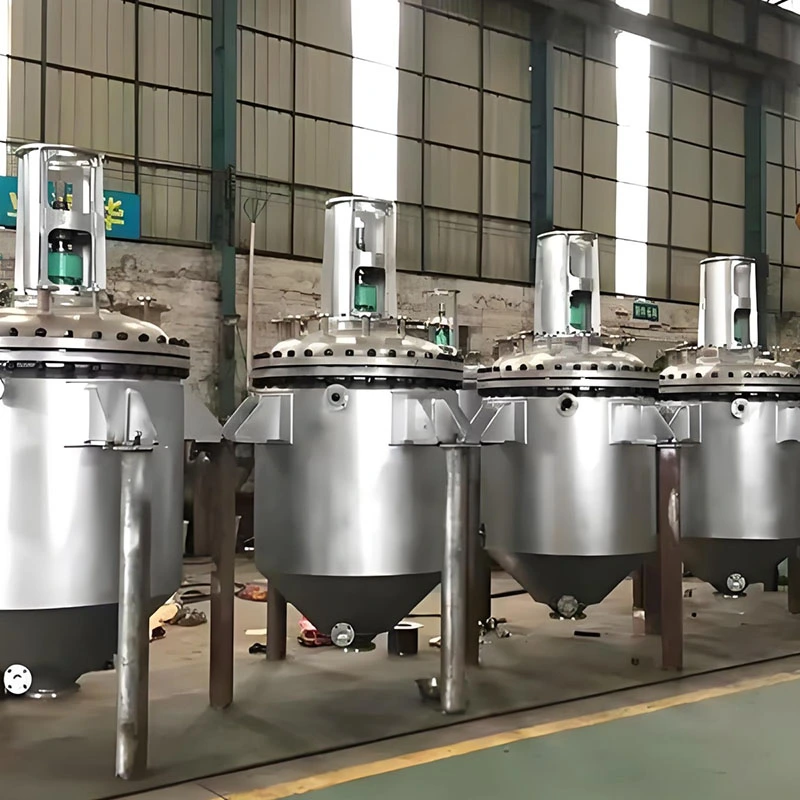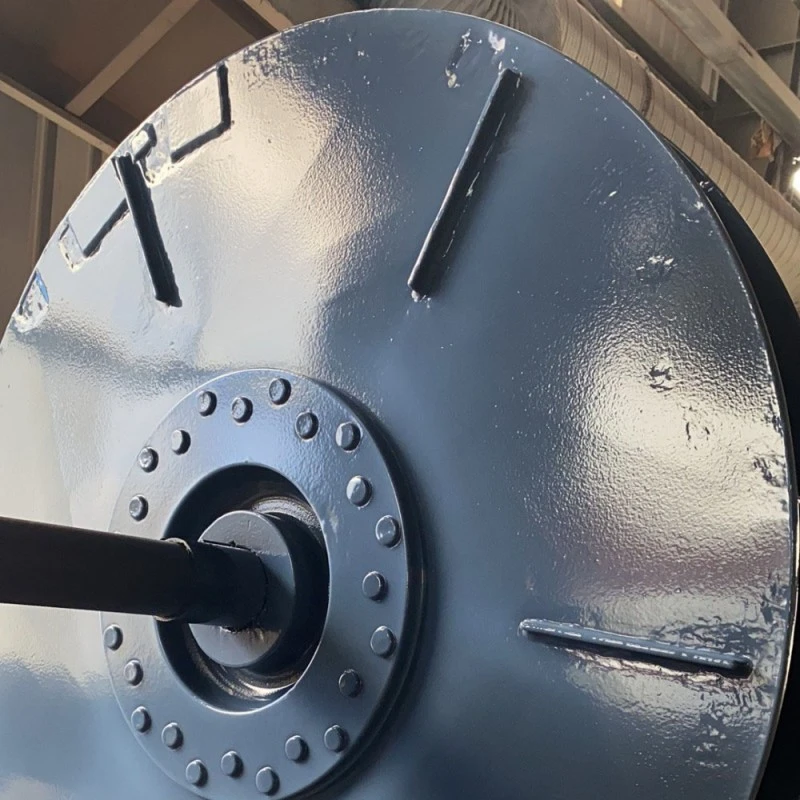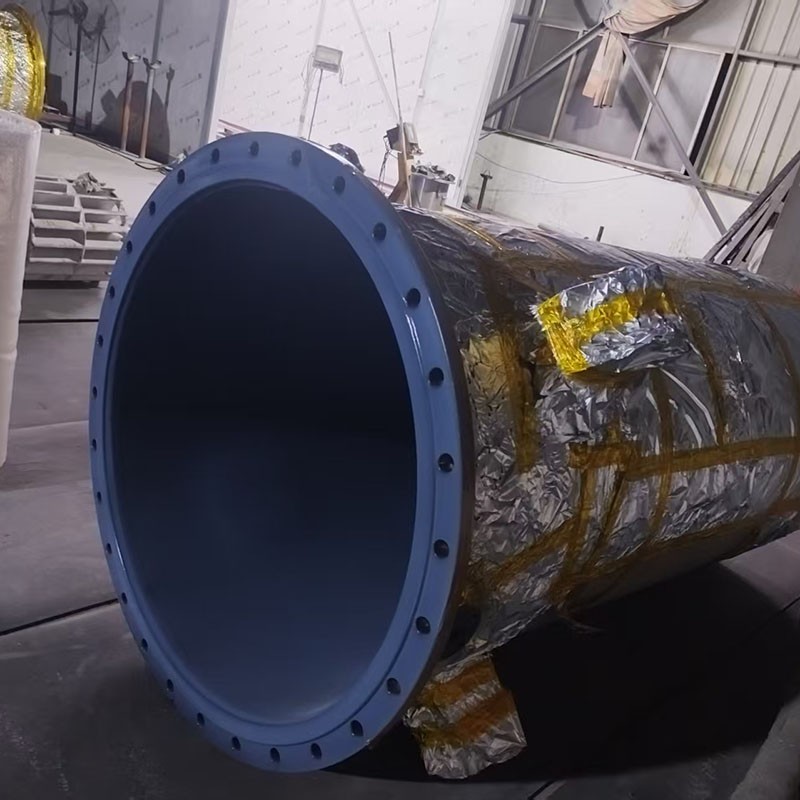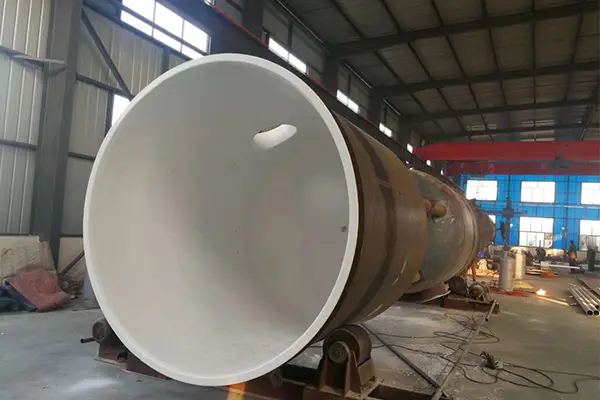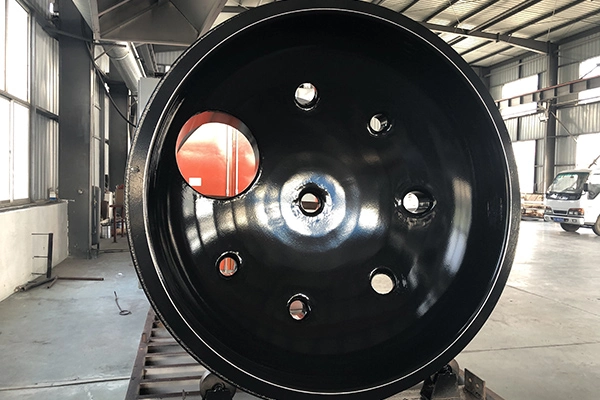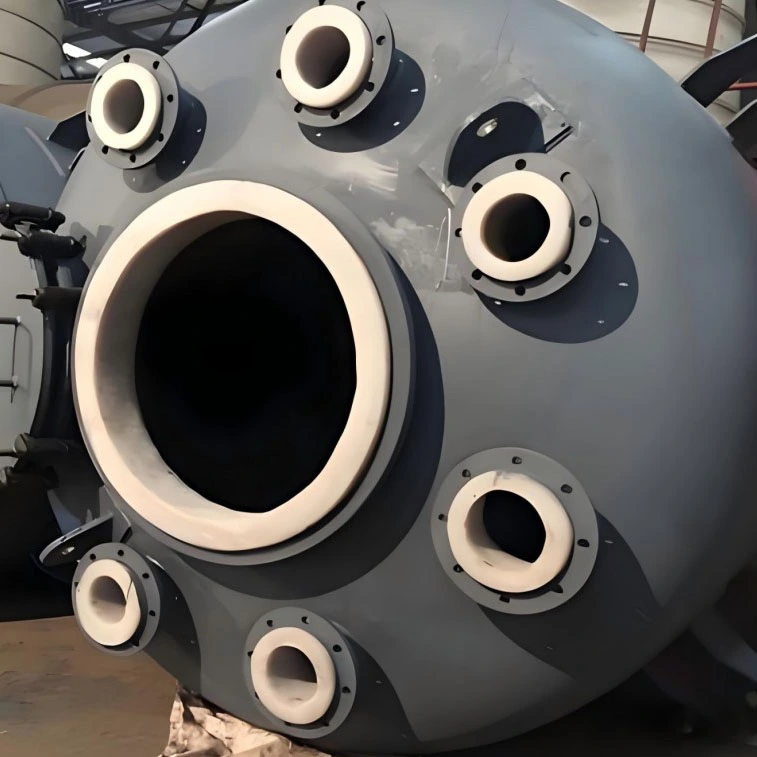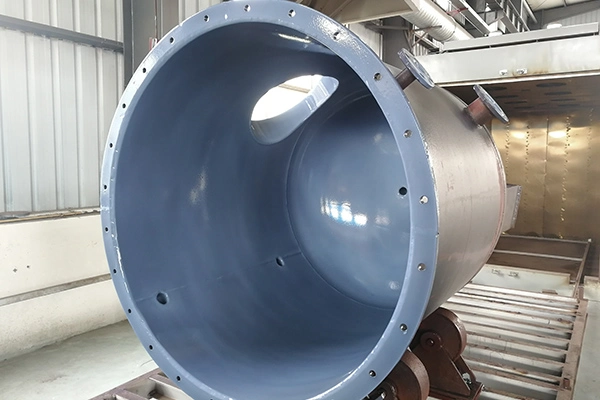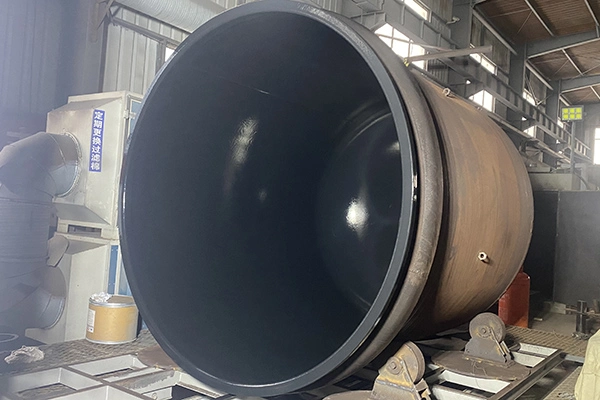

Corrosive process media, demanding operating conditions, and strict requirements for surface cleanliness can make equipment material selection a complex engineering task. Perfluoroalkoxy alkane (PFA) coating provides a fluoropolymer barrier over a metal substrate, helping protect the underlying surface from compatible chemical media. The suitability of a coated vessel depends on more than chemical resistance alone: coating integrity, temperature, pressure, equipment geometry, and the intended process all need to be evaluated together.
This guide explains how PFA-coated vessels are used in storage, material collection, mixing, and separation operations. It examines coating characteristics, equipment configurations, chemical compatibility, inspection methods, operating limits, cleaning practices, and technical specification requirements. The goal is to help process engineers define the information needed to assess a suitable configuration before equipment design and manufacturing are finalized.
Table of Contents
Choose a section below to explore material selection, vessel design, inspection, and application-specific considerations.
- Understanding PFA Coating Technology
- Important Coating Characteristics
- Four Main Equipment Configurations
- Chemical Compatibility and Process Media
- Temperature, Pressure, and Vacuum Conditions
- Complex Geometry and Coating Coverage
- Inspection and Quality Verification
- Industrial Applications
- Cleaning, Maintenance, and Operating Practices
- Coated Equipment and Sheet-Lined Equipment
- Preparing a Technical Specification
- Common Selection Mistakes
- Custom Configuration and Design Review
- Frequently Asked Questions
- Final Engineering Considerations
1. Understanding PFA Coating Technology
Chemical processing equipment often handles acids, alkalis, solvents, intermediates, and mixtures that can attack exposed metal surfaces. Selecting an appropriate material is therefore essential when the process requires reliable containment, controlled material contact, and consistent equipment performance. In many applications, the material used for the vessel structure and the material exposed to the process serve different engineering purposes.
PFA Coated Equipments use a PFA coating applied to the internal metal surface to provide a corrosion-resistant barrier for compatible process media. The metal substrate supplies structural support, while the polymer coating creates the intended contact surface. This arrangement can be considered for process vessels and internal structures where a protective fluoropolymer surface is required.
PFA stands for perfluoroalkoxy alkane, a fluoropolymer known for broad chemical resistance and thermal performance. Its properties make it useful in selected chemical processing environments, including applications where surface cleanliness and reduced direct contact between the process medium and the substrate are important.
How the protective barrier works
The coating separates the process medium from the underlying metal when the coating is continuous, properly applied, and suitable for the specified service. Chemical resistance is only one part of this function. The integrity of the coating also matters because local defects, damage, or inappropriate operating conditions can undermine the intended barrier.
Unlike a separate sheet lining, which uses a prefabricated polymer layer installed inside a vessel, a coating is applied to the substrate. Depending on the application and process, a coating method may be considered for internal surfaces with complicated shapes, multiple transitions, or details that require careful coverage.
The suitability of a particular application depends on the substrate preparation, application method, coating thickness, surface geometry, curing or processing requirements, and the inspection plan. These elements should be evaluated as part of the equipment design rather than treated as separate afterthoughts.
Why the metal substrate still matters
The coating does not replace the need for a properly engineered vessel. The metal body must be designed for the equipment's structural loads, dimensions, connections, support arrangement, and applicable pressure or vacuum duty. A corrosion-resistant surface cannot compensate for a vessel body that is unsuitable for its mechanical service.
Similarly, the substrate geometry influences the coating system. Corners, internal transitions, connection openings, and other complex features may require particular attention during surface preparation, application, and inspection. The proposed construction should provide access for applying and verifying the coating where the process requires protection.
Engineering principle: Assess the coating and its underlying structure as one equipment system. Chemical compatibility, barrier integrity, structural design, and process conditions must all support the intended application.
Start with the process duty
Before selecting a vessel, identify the role it must perform. A storage vessel holds a material for a defined period. A receiver collects material from another operation. A mixing tank supports blending or agitation, while a column provides an environment for a separation process. Each duty creates different requirements for geometry, connections, accessories, and operating conditions.
Defining this function early provides a practical basis for evaluating the coating system and equipment configuration. It also helps prevent a generic specification from overlooking a process feature that affects the final design.
2. Important Coating Characteristics
PFA coating is selected for a combination of material and surface properties. The importance of each property depends on the chemical medium, the required degree of surface protection, the equipment design, and how the vessel will be operated and cleaned.
Corrosion resistance
PFA resists a range of corrosive chemicals, making it a candidate for applications in which an exposed metal surface may not provide the required service life or material compatibility. Nevertheless, no selection should be based solely on the general description of a chemical as an acid, alkali, solvent, or oxidizing agent.
The exact chemical composition, concentration, temperature, contact duration, and process sequence all contribute to the compatibility assessment. Mixtures and changing process compositions require particular attention because their behavior may differ from that of an isolated chemical.
Surface smoothness and cleanability
A smooth polymer surface can help reduce the retention of process residues and may make cleaning easier in suitable equipment configurations. This characteristic can be relevant to fine chemical and pharmaceutical processes where the removal of residual materials is an important operating requirement.
However, surface smoothness alone does not guarantee cleanability. Equipment geometry, dead zones, drainability, the type of residue, cleaning-agent compatibility, and the cleaning procedure influence how effectively a vessel can be cleaned. Internal nozzles, corners, agitator interfaces, and other transitions should be considered when evaluating the overall design.
Contact-surface control
A continuous, suitable coating can reduce direct contact between the process medium and the metal substrate. This can be relevant where control of metal contact or potential contamination is important. The actual result depends on coating integrity, the chemical process, and the contamination-control requirements established for the application.
In high-purity service, the complete system must be evaluated rather than assuming that a fluoropolymer coating automatically satisfies every purity requirement. Coating condition, equipment cleanliness, connected components, cleaning procedures, and the possibility of material retention all contribute to the assessment.
Thermal performance
PFA can be used in selected applications involving elevated or reduced temperatures. The product information for this equipment range lists a temperature range of -20°C to 260°C. This should be treated as a stated range for technical evaluation, not as a universal operating limit for every vessel, coating system, chemical, or pressure condition.
The appropriate operating limit must be confirmed for the specific equipment and the full duty cycle. Temperature can influence polymer behavior, chemical compatibility, and the interaction between the coating and the metal substrate. Heating, cooling, repeated thermal cycles, and sudden temperature changes should therefore be identified during design.
Coverage and coating integrity
The function of a coating depends on its condition across the required internal surface. Consistent coverage and appropriate thickness are important, while pinholes or damage may compromise local protection. Surface preparation and application control are consequently important considerations during manufacture.
The inspection method and acceptance criteria should be suitable for the coating system and vessel design. A coating requirement should identify the areas to be protected, the applicable thickness requirements, and the inspection evidence required before the equipment is accepted.
- Evaluate chemical resistance against the actual medium and operating conditions.
- Consider the influence of surface finish and vessel geometry on cleaning.
- Define contact-surface and contamination-control requirements where applicable.
- Confirm the temperature and pressure limits for the complete equipment assembly.
- Specify coating inspection methods and acceptance criteria before production.
3. Four Main Equipment Configurations
Coated vessels serve different duties in a process plant. Storage tanks, receivers, mixing tanks, and columns may all require corrosion protection, but their shapes, connections, internal components, and operating sequences are not interchangeable.
3.1 PFA Coated Storage Tanks
Storage tanks hold compatible chemical materials, raw materials, intermediates, or process liquids until they are used or transferred to another operation. In these applications, the coating may remain in contact with the stored medium for an extended period.
The selection process should account for the stored medium's composition and concentration, the expected storage duration, the minimum and maximum temperatures, and the filling and emptying procedures. The process description should also cover any cleaning agents that will contact the internal surface.
Capacity should be defined in terms of both the required working volume and the nominal vessel volume. The final geometry must allow for the intended liquid level, installation arrangement, connections, and any additional process requirements.
- Confirm the substance or mixture to be stored and its operating conditions.
- Specify nominal volume, usable working volume, and principal dimensions.
- Identify inlet, outlet, drain, vent, and instrumentation requirements where applicable.
- Review access for inspection, cleaning, and routine maintenance.
A well-defined storage specification connects material compatibility with the practical requirements of the installation. The vessel should be evaluated for both its containment function and its interfaces with the surrounding system.
3.2 PFA Coated Receivers
Receivers collect materials from an upstream stage before the contents are transferred, processed further, or directed into another part of the plant. Depending on the process, the incoming material may be a liquid, condensate, intermediate, or stream whose composition changes during operation.
The receiving duty determines the required volume and connection arrangement. Designers should understand the incoming flow, how much material may accumulate before the next transfer, and whether pressure or temperature can change during collection and discharge.
A receiver may have several connections for incoming material, discharge, venting, level monitoring, or other functions. Their positions should be coordinated with the process layout, drainage needs, and access requirements. The internal coating must be suitable for the material that enters the vessel, including relevant changes in its composition.
- Identify the upstream equipment and the properties of the incoming stream.
- Define the expected accumulation volume and transfer frequency.
- Specify inlet, discharge, vent, and monitoring connections.
- Consider pressure changes, condensation, and temperature variations where relevant.
Defining these operating details helps establish the receiver's purpose within the wider process system and provides a clear basis for finalizing its configuration.
3.3 PFA Coated Mixing Tanks
Mixing tanks combine two or more materials or maintain a mixture under controlled operating conditions. Depending on the duty, the equipment may include an agitator, a shaft entry, a drive assembly, seals, instrumentation, and additional material connections.
The tank's coating is only one component of the full material-contact system. Any other wetted parts, including seals and gaskets, must be considered separately for compatibility with the process medium. Their temperature and pressure limits must also be consistent with the equipment duty.
Mechanical requirements influence the configuration as well. The expected liquid properties, mixing objective, required operating speed, and process behavior should be established before the agitator arrangement is finalized. The interface between the mixing assembly and the coated vessel should be reviewed so that mechanical loading and access requirements are addressed.
- Describe the materials being mixed and relevant changes during operation.
- Specify the mixing objective and the required agitator arrangement.
- Identify shaft entries, seals, gaskets, instruments, and other accessories.
- Review cleaning access and the removal of residues from internal features.
The final arrangement should meet the process requirements without assuming that the same agitator or connection layout is appropriate for every mixing application.
3.4 PFA Coated Columns
Coated columns may be used in separation operations such as distillation and rectification when the process requires a corrosion-resistant internal surface. Their configuration depends on the separation duty, operating conditions, process materials, and the construction of the internal components.
Unlike a simple storage vessel, a column can contain multiple internal features that influence contact between process phases. Depending on the design, the arrangement may include internal structures and connections that need to be coordinated with the coating process and inspection requirements.
Process engineers should define the intended separation task, operating temperature and pressure, material composition, and the requirements of associated equipment. The proposed coating method must be suitable for the column's geometry and the internal surfaces that require protection.
- Describe the intended separation process and relevant operating stages.
- Identify the process media and expected changes in composition.
- Provide column dimensions, connection positions, and internal configuration details.
- Establish how coating coverage and integrity will be assessed on relevant surfaces.
The equipment specification should reflect the actual separation process rather than treating a column as a storage vessel with a different shape.
| Equipment Type | Primary Function | Main Design Focus | Key Information |
|---|---|---|---|
| Storage tank | Holds chemical materials for a specified period. | Containment, storage conditions, and transfer access. | Stored medium and working volume. |
| Receiver | Collects material from an upstream process. | Incoming flow, accumulation, and discharge. | Transfer sequence and connection layout. |
| Mixing tank | Combines materials or maintains a mixture. | Agitation, shaft interfaces, and wetted accessories. | Mixing duty and material properties. |
| Column | Supports a separation process. | Internal configuration and process conditions. | Separation duty and internal arrangement. |
These are general functional distinctions. Actual dimensions, coating methods, and operating limits must be established for the specified equipment and process.
4. Chemical Compatibility and Process Media
Chemical compatibility should be verified using the actual process information rather than a broad material category. Although PFA has resistance to a range of corrosive chemicals, the suitability of a specific coating depends on the composition, concentration, temperature, and duration of exposure.
Identify the complete chemical composition
Begin by listing the substances that will contact the coated surface. Include the main ingredients, relevant impurities, additives, intermediates, and reaction products. Where the process involves a mixture, the full composition should be described as accurately as the available process data permits.
A chemical name on its own may not capture the behavior of a concentrated solution or multicomponent mixture. Similarly, the composition entering a vessel may differ from the composition present later in a batch or after a separation stage.
For processes involving changing chemical conditions, identify the important stages separately. This makes it possible to evaluate the coating against the materials it may encounter throughout the operating cycle.
Account for concentration and temperature
Concentration can affect the compatibility assessment, especially where a process includes dilution, evaporation, concentration, or reaction. The specification should distinguish typical values from the minimum and maximum conditions that the equipment may experience.
Temperature must be assessed alongside composition. A coating may encounter different conditions during normal operation, heating, cooling, cleaning, or shutdown. Its suitability should be confirmed for the combinations of chemical composition and temperature relevant to the application.
Include cleaning agents and auxiliary media
Cleaning can expose the internal surface to substances that are not part of normal production. Cleaning solutions, rinsing fluids, and maintenance-related chemicals should therefore be included in the compatibility review wherever they contact the coating.
The full cleaning procedure matters as well. Its temperature, exposure time, and mechanical actions can affect the equipment even if the cleaning chemical itself is compatible with the polymer. The compatibility of seals, gaskets, and other wetted components should also be confirmed.
Consider contact duration and operating variations
A storage vessel may expose its coating to a medium for an extended period, while a receiver may encounter shorter but repeated contact. A mixing vessel can experience more varied local conditions as materials are combined. These different duties should be described when evaluating coating suitability.
Reasonably foreseeable process deviations should also be considered. Unexpected concentration changes, prolonged holding periods, or an unintended combination of materials may move the process away from its normal operating conditions. The equipment specification should identify such scenarios where they could affect the coating or vessel integrity.
Compatibility checklist:
- Chemical identities, concentrations, and relevant mixtures.
- Process stages in which the chemical composition changes.
- Minimum, normal, and maximum contact temperatures.
- Cleaning fluids and other auxiliary media that contact the coating.
- Expected contact duration and relevant process deviations.
If important chemical data are unavailable, record the uncertainty for technical review. Compatibility should not be considered confirmed simply because a general material description suggests resistance to the primary chemical.
5. Temperature, Pressure, and Vacuum Conditions
Operating conditions affect the coating and the metal vessel together. Temperature influences polymer behavior and chemical compatibility, while pressure and vacuum conditions affect the mechanical demands placed on the complete assembly. These parameters should be evaluated before the configuration is approved.
Temperature limits and thermal cycling
The supplied product information lists an operating temperature range of -20°C to 260°C for the equipment range. This range should be confirmed against the individual coating system, vessel construction, chemical medium, and operating conditions. It should not be interpreted as a guarantee that every configuration is suitable throughout the entire range.
The specification should identify the normal temperature, maximum and minimum temperatures, and expected temperature changes during startup, operation, cleaning, and shutdown. If a reaction generates heat or the process uses heating and cooling cycles, these stages should be included in the assessment.
Rapid temperature changes may create additional demands on the relationship between the polymer coating and the metal substrate. Designers should consider the expected cycle, duration, and frequency when determining whether the proposed equipment is appropriate.
Positive-pressure operation
Record the normal operating pressure, design pressure, and foreseeable transient conditions. Material charging, vapor formation, reaction, discharge, and connections to other process equipment may produce pressure changes that influence vessel design.
The pressure capability of the vessel depends on the structural design and relevant accessories, not merely on the coating material. The body, joints, nozzles, covers, and other pressure-containing features must be assessed according to the applicable design requirements.
Vacuum conditions
Vacuum service requires explicit evaluation because it produces a pressure differential that differs from positive-pressure operation. Vacuum may occur during processing, condensation, pumping, or other operating stages.
The specification should identify the minimum absolute pressure, the temperature at which vacuum may occur, the duration of exposure, and the expected number of cycles. The structure and coating system must be suitable for those conditions.
Chemical resistance alone does not establish vacuum suitability. Nor should the suitability of a vessel under positive pressure be taken as proof that the same configuration can withstand the specified vacuum duty.
Evaluate the combined operating envelope
Temperature, pressure, and chemical composition should be assessed together. If maximum temperature and a pressure or vacuum extreme can occur during the same process stage, that combination should be identified. Where operating stages have different requirements, the design review should reflect each stage rather than combining unrelated limits into one assumed condition.
| Parameter | Required Information | Engineering Review |
|---|---|---|
| Temperature | Normal range, extremes, and thermal cycle. | Coating suitability and thermal behavior of the assembly. |
| Positive pressure | Operating pressure, design pressure, and transients. | Structural design and pressure-containing components. |
| Vacuum | Minimum absolute pressure, duration, and temperature. | Suitability of the complete vessel under the specified pressure differential. |
| Process cycling | Startup, shutdown, cleaning, and repeated changes. | Combined thermal, mechanical, and chemical conditions. |
6. Complex Geometry and Coating Coverage
Internal geometry can influence both coating application and the finished equipment's ability to perform its process duty. Flat or relatively straightforward surfaces present different application challenges from vessels with multiple openings, internal transitions, narrow areas, and complex connections.
Understand the internal surface layout
Before choosing a coating arrangement, identify all surfaces that require protection. Include the main vessel wall, internal fittings, nozzles, connection transitions, and other process-contact areas where the specification calls for a coated surface.
Drawings should make it clear which surfaces are included and where the coated boundary ends. This is particularly useful when a vessel includes several connection types or components produced using different manufacturing methods.
Pay attention to transitions and openings
Nozzle openings, corners, changes in diameter, and internal transitions may require more attention than a large, accessible surface. Their geometry can affect coating access, coverage, inspection, and the uniformity of the finished layer.
These areas should be considered during equipment design, not only after fabrication has started. Where access is restricted, the manufacturing plan should establish how the coating will be applied and verified according to the required criteria.
Coordinate geometry with inspection
Coating coverage and coating inspection are closely related. A surface that is difficult to reach during application may also be difficult to examine after the coating process. The design should account for the inspection methods selected for the equipment.
Required thickness, coverage, and integrity checks should be defined according to the specific coating construction. The inspection plan should identify which surfaces will be examined, how they will be assessed, and what results constitute acceptance.
Consider surface preparation and manufacturing access
The coating process begins before the polymer is applied. Surface preparation, the condition of the substrate, and access to the required areas can influence the manufacturing process. The exact preparation and application requirements depend on the selected method and the equipment design.
Dimensional changes or late modifications may affect the surfaces available for application and inspection. For this reason, the vessel configuration should be reviewed before manufacturing drawings and coating requirements are finalized.
Balance coating requirements with process functionality
A vessel's internal structure must satisfy both the process function and the coating requirements. For example, a mixing tank may need specific internal features to perform its intended duty, while a column may include components necessary for separation. These features should be designed and reviewed as part of the complete equipment system.
The goal is to establish a configuration that meets process needs while allowing the required coating coverage and inspection. Neither surface protection nor process functionality should be considered in isolation.
7. Inspection and Quality Verification
Inspection helps establish whether the manufactured coating meets the agreed technical requirements. The inspection plan should be developed for the specific equipment and coating system, taking account of the equipment geometry, process duty, applicable standards, and acceptance criteria.
Coating thickness inspection
Coating thickness is an important part of the specification where defined thickness requirements apply. The required range and the method for verifying it should be confirmed before production. The inspection method must be appropriate for the coating, substrate, and equipment configuration.
Measurements should be evaluated against the agreed criteria rather than relying on a general statement that the coating appears uniform. Where different areas have different requirements, the inspection plan should identify those areas and explain how conformity will be assessed.
Pinhole detection and coating integrity
Pinhole detection can help identify certain defects that may affect the coating's barrier function. Its suitability, procedure, and acceptance criteria depend on the specific coating system and equipment design.
The method should be selected in accordance with the coating thickness, material characteristics, substrate, and relevant technical requirements. Inspection settings should not be assumed to be identical for every product. The agreed procedure should identify the equipment being inspected and how the results will be documented.
Pressure testing and equipment integrity
The supplied product information identifies pressure testing among the checks specified before delivery. The relevant test type, procedure, and acceptance conditions should be confirmed for the individual equipment according to its design and applicable requirements.
Pressure testing and coating inspection address different aspects of the finished assembly. A structural or pressure-related test does not automatically establish coating integrity, while coating examination does not replace the necessary structural checks.
Inspection of difficult areas
Nozzles, openings, corners, and other changes in geometry may require specific inspection attention. Their location and shape can affect access to the coated surface and the choice of inspection method.
Inspection requirements should therefore be coordinated with the equipment drawing. This allows the manufacturing team to identify critical areas and establish how each required surface will be checked before the equipment is released.
Define records and acceptance criteria
A useful inspection specification identifies the procedure, the area or component being assessed, the applicable acceptance criteria, and the documents required for review. Depending on the project, the record package may include approved drawings, coating-thickness results, pinhole-detection records, pressure-test documentation, and records of accepted deviations.
The exact documentation depends on the project requirements. Agreeing on it before manufacture helps ensure that the customer and manufacturer use the same criteria when reviewing the completed vessel.
Inspection planning checklist:
- Identify the required coating surfaces and thickness criteria.
- Define the applicable pinhole-detection procedure where required.
- Confirm pressure-test requirements for the equipment design.
- Identify difficult geometries that need specific inspection attention.
- Agree on acceptance criteria and the required inspection records.
8. Industrial Applications
PFA-coated process vessels may be considered in industries that handle corrosive media or require control of contact between the process material and a metal surface. The appropriate configuration depends on the intended operation, chemical compatibility, equipment design, and operating conditions.
Fine chemical production
Fine chemical manufacturing can involve multiple reaction, storage, mixing, and separation stages. Different process steps may expose equipment to changing chemical compositions, concentrations, and temperatures.
A coated tank may be considered for compatible material storage, while a coated mixing vessel may be appropriate where an internal protective surface and a defined mixing arrangement are required. Separation stages may require a column configuration designed around the process duty and internal geometry.
The selection process should identify the material at each stage, the operating cycle, and the accessories that contact the process medium. Where the chemical composition changes during processing, the compatibility assessment should cover the relevant stages.
Pharmaceutical processing
Pharmaceutical processing may involve storing, receiving, mixing, and transferring chemical materials or intermediates. In these environments, equipment selection can involve both chemical compatibility and requirements for surface cleanliness.
A coated surface may help reduce direct contact between compatible process media and the underlying metal substrate. However, suitability for a particular pharmaceutical process also depends on the required contamination-control criteria, the complete equipment configuration, cleaning procedures, and verification of coating integrity.
Process engineers should identify the required cleaning practices, the materials used in each stage, and the inspection expectations. A general claim of surface smoothness or chemical resistance does not replace application-specific assessment.
New energy and electronic chemical processing
Some new energy and electronic chemical applications involve corrosive materials or processes where control of metal contact is important. Storage, transfer, mixing, and related operations may therefore require equipment with a suitable internal protective surface.
The actual chemical composition and process conditions must guide the selection. Where contamination control is a priority, the coating system, connected components, cleaning method, and inspection criteria should be considered together. The equipment should be assessed against the requirements of the specific process rather than selected solely because it belongs to a particular industry.
Laboratory and pilot-scale plants
Laboratory and pilot facilities may use smaller vessels to evaluate reactions, mixing procedures, or separation processes before a larger production arrangement is established. Such equipment still requires a clear definition of chemical compatibility, operating temperature, pressure or vacuum, and material-contact requirements.
Connections and internal configurations can be particularly important when the equipment must accommodate different process stages or instruments. The inspection plan should also suit the vessel's design and intended operating conditions.
When a pilot process is later scaled up, the design should be reassessed instead of simply multiplying the vessel capacity. Changes in dimensions, mixing behavior, thermal conditions, and pressure requirements may alter the engineering considerations.
Match the equipment type to the application
Industry classification alone does not determine whether a particular vessel is suitable. A storage duty in a fine chemical plant may have different requirements from a separation operation in the same facility. The process function, operating conditions, coating specification, and installation layout should remain the primary selection factors.
- For storage, define the medium, holding duration, usable volume, and transfer needs.
- For receiving, specify incoming-stream characteristics and discharge arrangements.
- For mixing, identify the mixing duty, agitator configuration, and wetted accessories.
- For separation, provide the process duty, column geometry, and internal configuration requirements.
9. Cleaning, Maintenance, and Operating Practices
The continued suitability of coated equipment depends on appropriate installation, operating procedures, cleaning practices, and maintenance. Good surface protection at delivery does not remove the need to manage operating conditions and inspect the vessel in service.
Handle and install the vessel carefully
Transport, lifting, and positioning should follow the equipment's approved handling instructions and designated lifting arrangements. Uncontrolled impacts or unsuitable lifting methods can damage the coating or other parts of the assembly even if the outside of the vessel shows no obvious sign of damage.
During installation, confirm that the vessel supports and piping connections align with the approved arrangement. Forced alignment or unplanned loads on nozzles can introduce stresses that may not have been included in the original design assumptions.
Before operation begins, check the installed configuration against the approved drawings. Confirm the vessel position, connections, instruments, and accessories, and complete the required pre-commissioning checks.
Control startup and shutdown conditions
Operating procedures should establish how the vessel is filled, heated or cooled, pressurized where applicable, and returned to a safe condition. Where vacuum, thermal cycling, or rapid changes in process conditions are possible, those scenarios should be included in the approved operating instructions.
Unexpected changes in pressure, temperature, or chemical composition may move the equipment outside its approved operating envelope. Procedures should explain how such deviations are recognized and addressed rather than allowing the vessel to continue operating under unassessed conditions.
Select compatible cleaning agents
Cleaning agents must be compatible with the coating and any other wetted components. The cleaning temperature, contact duration, rinsing procedure, and possible mechanical action should also be considered. Compatibility with the principal process medium does not automatically establish suitability for the cleaning process.
Surface-cleaning methods should follow the equipment's instructions. Abrasive tools or procedures that may scratch, cut, or otherwise damage the coating should not be used unless they are specifically approved for the relevant construction.
Equipment design also affects cleaning results. Drainage, access, internal connections, and areas where material can accumulate should be considered when the cleaning procedure is established.
Inspect for signs of surface damage
Routine maintenance should follow the inspection requirements appropriate to the application. Visible damage, unusual operating behavior, or changes around connections may require further examination. The inspection process should follow the approved method rather than relying only on visual appearance.
If a coating defect is suspected, the cause and extent should be evaluated before any repair or modification is undertaken. Repair methods must be suitable for the original coating system, substrate, equipment geometry, and intended process conditions.
Maintain accurate operating records
Records of operating conditions, cleaning activities, inspection results, maintenance work, and equipment modifications can help identify recurring issues. They also support comparison between the original design conditions and the actual process duty.
If the chemical medium, concentration, operating temperature, pressure, or cleaning method changes substantially, the equipment should be reviewed before the revised process is introduced. A vessel approved for one set of conditions should not automatically be considered suitable for a different application.
10. Coated Equipment and Sheet-Lined Equipment
PFA coating and sheet lining are different approaches to creating a corrosion-resistant internal surface. The appropriate option depends on the vessel geometry, process requirements, coating or lining specification, operating conditions, and manufacturing method.
How the construction methods differ
A PFA coating is applied to the metal substrate using a suitable application process. This approach may be considered for certain internal structures where the coating method can provide the required coverage and where complex geometry makes surface access and uniformity important design considerations.
Sheet-lined equipment uses a separate polymer lining installed within the vessel. Its construction, joints, transitions, attachment arrangements, and geometry differ from those of an applied coating. Each method needs to be evaluated according to its own technical requirements.
Why geometry influences the decision
Vessel geometry can affect how an internal protective layer is installed or applied, as well as how its integrity is inspected. Numerous nozzles, intricate internal features, and changes in surface direction may influence which construction method is practical for the intended application.
However, complex geometry by itself does not establish that one method is always preferable. The specific manufacturing process, achievable coverage, inspection requirements, and performance conditions must be reviewed before the final selection is made.
Compare the complete equipment requirements
The selection should address the chemical medium, operating temperature, pressure or vacuum, vessel dimensions, required internal details, and expected maintenance practices. The specification should also clarify how coating or lining integrity will be assessed and which criteria determine acceptance.
| Comparison Factor | Applied PFA Coating | Sheet-Lined Construction |
|---|---|---|
| Construction method | Polymer coating applied to the metal substrate. | Separate polymer sheet lining installed inside the vessel. |
| Geometry considerations | Application access and coverage must be evaluated for the internal shape. | Sheet installation, joints, transitions, and internal dimensions require review. |
| Quality verification | Inspection methods must suit the coating material, thickness, and equipment geometry. | Inspection must suit the lining construction, joints, and vessel configuration. |
| Operating suitability | Depends on coating integrity, chemical compatibility, temperature, and pressure conditions. | Depends on lining compatibility, construction, joints, and operating conditions. |
| Design decision | Consider where application coverage and coating inspection can meet the specification. | Consider where the proposed sheet construction meets the equipment requirements. |
This comparison describes general construction differences. It does not establish that either method is universally better or suitable for every chemical process.
The decision should follow the technical requirements of the individual application. Chemical compatibility, full-equipment design, manufacturing capability, inspection, and operating limits all need to be considered before a coating or lining method is approved.
11. Preparing a Technical Specification
A well-prepared specification gives the equipment engineering team the information needed to assess the proposed vessel and identify unresolved design questions. It should explain the process duty, chemical environment, mechanical operating envelope, dimensions, connection requirements, and quality expectations.
The following sequence can help organize the information before a design review or quotation request.
-
Define the equipment function.
Identify whether the vessel will be used for storage, receiving, mixing, or separation. Describe the material flow, connected equipment, and operating stages that define its role in the process.
-
Document the process medium.
List the chemical substances, concentrations, relevant mixtures, impurities, reaction products, and cleaning agents that may contact the internal surface.
-
Establish the operating envelope.
Specify normal and extreme temperatures, operating and design pressure, vacuum conditions where applicable, and the process stages in which those conditions may occur.
-
Confirm capacity and dimensions.
Provide nominal capacity, required working volume, overall dimensions, installation restrictions, support requirements, and available maintenance access.
-
Prepare the connection and accessory schedule.
Identify nozzles, openings, drains, vents, instruments, agitator arrangements, and other components. Include position, size, connection type, and relevant drawing information.
-
Define coating and inspection requirements.
Specify the areas to be coated, relevant thickness criteria, applicable integrity checks, required pressure testing, acceptance criteria, and necessary documentation.
-
Review installation and maintenance needs.
Identify access restrictions, connection interfaces, cleaning requirements, expected maintenance practices, and any limitations arising from the existing plant layout.
-
Resolve open technical questions.
Record missing chemical information, uncertain operating conditions, conflicting dimensions, and details that require confirmation before the final design is approved.
Technical information checklist
| Category | Required Information | Purpose |
|---|---|---|
| Process duty | Equipment function, operating stages, material flow, and connected equipment. | Establishes the required configuration. |
| Chemical medium | Composition, concentration, mixtures, impurities, and cleaning agents. | Supports compatibility assessment. |
| Operating conditions | Temperature, pressure, vacuum, and process variations. | Defines the operating envelope. |
| Dimensions | Nominal capacity, working volume, overall size, and installation constraints. | Checks capacity and plant integration. |
| Connections | Nozzle positions, openings, instruments, agitator details, and accessories. | Coordinates interfaces and internal arrangement. |
| Quality assurance | Coating thickness, integrity checks, pressure testing, and acceptance criteria. | Defines how conformity will be verified. |
Where drawings are available, include them in the technical review. Existing piping layouts, foundation details, and installation restrictions can be important when the vessel must fit into an established plant.
If a required parameter is unknown, make that uncertainty visible. A clear list of open items allows the responsible parties to address the missing information before the proposed specification is finalized.
12. Common Selection Mistakes
Many equipment specification problems arise from treating the coating as the only factor that determines suitability. A reliable selection process also accounts for the metal structure, equipment geometry, operating conditions, installation, and required inspection.
Assuming general chemical resistance guarantees suitability
A broad statement about PFA's chemical resistance does not establish compatibility with every concentration, mixture, or operating temperature. The actual application may include cleaning agents or process stages with different chemical compositions.
Better approach: Identify all relevant process media and confirm compatibility against the real temperature, concentration, exposure, and operating conditions.
Treating a stated temperature range as universal
A published equipment range may describe the intended product offering, but the allowable limit for an individual vessel depends on its construction, coating system, medium, pressure, and operating cycle.
Better approach: Confirm the temperature limits for the selected configuration and evaluate the combinations of temperature and pressure that occur in service.
Specifying only the vessel capacity
Capacity alone does not establish the overall dimensions, working volume, connection positions, or installation requirements. A vessel with the correct nominal volume may still be unsuitable for the available plant layout or the intended process operation.
Better approach: Specify working volume, principal dimensions, connection requirements, access restrictions, and support arrangements together.
Overlooking complex internal features
Openings, corners, transitions, and internal components can affect coating application, coverage, and inspection access. If these features are not reviewed early, important requirements may be difficult to address after fabrication has begun.
Better approach: Provide a sufficiently detailed drawing and define the surfaces that require protection, together with the inspection method for critical areas.
Ignoring accessories and wetted components
The main coated surface may be compatible with the process medium while an associated seal, gasket, instrument, or other component is not. These parts must be reviewed separately as elements of the complete equipment system.
Better approach: Include relevant accessories in the material compatibility and operating-condition review.
Leaving inspection criteria undefined
A general requirement for a high-quality coating does not identify how the finished layer will be examined or what constitutes acceptance. This can make verification inconsistent or incomplete.
Better approach: Agree on applicable inspection procedures, thickness requirements, integrity checks, testing conditions, and records before production.
Failing to reassess a changed process
A vessel selected for one process may not remain suitable if the chemical medium, concentration, temperature, pressure, or cleaning procedure changes. Even a relatively small process modification can affect one or more of the original assumptions.
Better approach: Review changes against the approved equipment specification before introducing the revised operating conditions.
Selection principle: The coating, vessel structure, process duty, and inspection plan must be evaluated together. Confirming only one of these elements is not enough to establish the suitability of the complete equipment assembly.
13. Custom Configuration and Design Review
Industrial process vessels often need to fit a particular capacity, plant layout, connection arrangement, or internal configuration. Customization can address these requirements, but the proposed design must remain consistent with the intended chemical and mechanical operating conditions.
Zhuoyan provides industrial anti-corrosion lining and chemical equipment design and manufacturing services. Equipment configurations can be discussed in relation to the required vessel type, dimensions, internal structure, nozzle arrangement, and specified process conditions.
Start with the intended application
The initial discussion should establish what the vessel must do and which surfaces need corrosion protection. A storage tank may require a relatively straightforward arrangement of transfer connections, while a mixing tank or column may need a more detailed internal configuration.
Defining essential process functions helps distinguish required features from optional accessories. It also establishes a more precise basis for reviewing vessel geometry, coating coverage, operating conditions, and maintenance access.
Provide dimensions and connection details
Vessel volume, overall dimensions, nozzle positions, access openings, supports, and accessory requirements should be documented as clearly as possible. If the equipment must connect to an existing system, the relevant plant drawings and interface dimensions should be included.
Details should be checked together rather than independently. A change in the position of a nozzle, for example, may influence piping alignment, internal access, and the areas requiring coating inspection.
Confirm operating conditions before approval
The chemical medium, concentration, temperature, pressure or vacuum requirements, and process cycle should be reviewed before the configuration is finalized. Any uncertainty that could affect coating suitability or structural design should remain an open technical item until it is resolved.
Where the application involves elevated temperatures, pressure changes, or vacuum duty, the selected configuration should be specifically evaluated for those conditions. A general description of the equipment range should not be substituted for confirmation of the limits applying to the proposed vessel.
Coordinate manufacturing and quality requirements
The approved technical documents should identify the intended equipment construction, coating requirements, connections, accessories, and relevant inspection criteria. This provides a shared basis for reviewing the manufactured product.
Coating thickness checks, pinhole detection, pressure testing, and other inspections should be specified where required by the equipment design. Their applicable methods and acceptance limits should be agreed before manufacturing is released.
Prepare information for a technical discussion
- Equipment type and intended process function.
- Chemical composition, concentration, mixtures, and cleaning media.
- Normal and extreme operating temperatures.
- Operating pressure, design pressure, and vacuum conditions where applicable.
- Required nominal capacity, working volume, and overall dimensions.
- Nozzle schedule, connection positions, internal features, and accessories.
- Coating thickness, integrity inspection, testing, and acceptance requirements.
- Installation drawings, plant interfaces, and access restrictions.
These details provide a practical starting point for technical assessment and quotation. The final design should be confirmed after the chemical, mechanical, dimensional, and quality requirements have been reviewed for the intended service.
14. Frequently Asked Questions
The following answers cover common questions about PFA coating, equipment configuration, operating conditions, and technical evaluation.
What is PFA coating used for in chemical processing?
PFA coating creates a fluoropolymer barrier over a metal surface to provide corrosion protection for compatible process media. It may be used in storage tanks, receivers, mixing tanks, and columns. The appropriate configuration depends on chemical compatibility, equipment geometry, operating conditions, and the requirements of the process.
What is the difference between PFA-coated and sheet-lined equipment?
A coating is applied to the metal substrate, while sheet-lined equipment uses a separate polymer lining installed inside the vessel. The methods involve different construction and inspection considerations. The selection depends on vessel geometry, process conditions, lining or coating requirements, and the manufacturing method suitable for the application.
What temperature range is specified for this equipment range?
The provided product information lists a temperature range of -20°C to 260°C. This range must be confirmed for the selected vessel, coating construction, chemical medium, pressure conditions, and operating cycle. It should not be assumed to apply automatically to every equipment configuration.
Can the vessel dimensions and internal configuration be customized?
Equipment configuration can be discussed according to the required vessel type, capacity, dimensions, nozzle positions, internal structure, and process accessories. The feasible arrangement depends on the intended application, manufacturing method, coating requirements, and specified operating conditions.
How should chemical compatibility be evaluated?
Identify the complete chemical composition, concentration, operating temperature, exposure duration, and any relevant cleaning agents or process variations. Compatibility should be confirmed for the selected coating and actual operating conditions. A general statement about chemical resistance is not a substitute for application-specific evaluation.
Which inspection methods may be used for the coating?
The supplied product information specifies pinhole detection, coating thickness inspection, and pressure testing before delivery. The exact procedures and acceptance criteria should be confirmed for the individual equipment and its construction. These checks address different aspects of coating condition and equipment integrity.
Does a smooth coating guarantee easy cleaning?
No. A smooth surface may help reduce material retention, but actual cleanability also depends on vessel geometry, residue characteristics, drainage, access, cleaning agents, temperature, and cleaning procedures. The complete equipment design and the intended cleaning method should be assessed together.
What information is needed to request a suitable equipment configuration?
Provide the intended process function, chemical composition and concentration, operating temperature, pressure or vacuum requirements, required capacity, overall dimensions, connection layout, internal features, accessories, and inspection requirements. Existing plant drawings and installation restrictions can also help the engineering team evaluate the proposed arrangement.
15. Final Engineering Considerations
Choosing PFA Coated Equipments for a chemical process requires a coordinated assessment of coating compatibility, surface coverage, equipment structure, operating conditions, and process requirements. Storage tanks, receivers, mixing tanks, and columns serve different functions, so each configuration must be developed around its intended duty.
A reliable specification should define the chemical medium and concentration, temperature range, pressure or vacuum conditions, capacity, dimensions, connections, and accessories. Coating thickness requirements, pinhole detection, pressure testing, and other applicable inspection criteria should also be established before manufacturing.
Installation, cleaning, maintenance, and foreseeable process variations are part of the overall equipment assessment. They help determine whether the proposed construction and coating arrangement are appropriate for the expected conditions throughout the operating cycle.
By defining these requirements early and resolving technical uncertainties before design approval, process engineers can create a clearer basis for equipment configuration, quality verification, and integration into the production system.
Discuss Your PFA Coating Requirements
Provide your chemical medium, concentration, operating temperature, pressure or vacuum conditions, vessel capacity, connection layout, and coating inspection requirements to begin a technical discussion about the appropriate equipment configuration.
Submit Your Equipment Requirements